


In a significant victory for Nigeria’s counter-insurgency efforts, the Nigerian Army confirmed on February 1, 2026, the successful neutralization of a high-ranking Boko Haram commander during a daring night operation in the heart of Borno State. The operation, which also resulted in the death of ten other insurgents, is being hailed as one of the most successful “surgical strikes” in recent years, dealing a massive psychological and operational blow to the terrorist group.
For over a decade, the North-East has been the epicenter of a grueling conflict, but the events of early February suggest a fundamental shift in the military’s tactical approach. Moving away from purely defensive posturing, the Nigerian Armed Forces have adopted a “proactive hunting” strategy, utilizing advanced technology and coordinated intelligence to strike at the heart of insurgent leadership.
The Midnight Operation
The raid took place in a remote enclave within the Sambisa Forest fringes, a region long used by the insurgents as a staging ground for attacks on civilian and military targets. According to military sources, the operation was executed with “pinpoint precision” following weeks of surveillance.
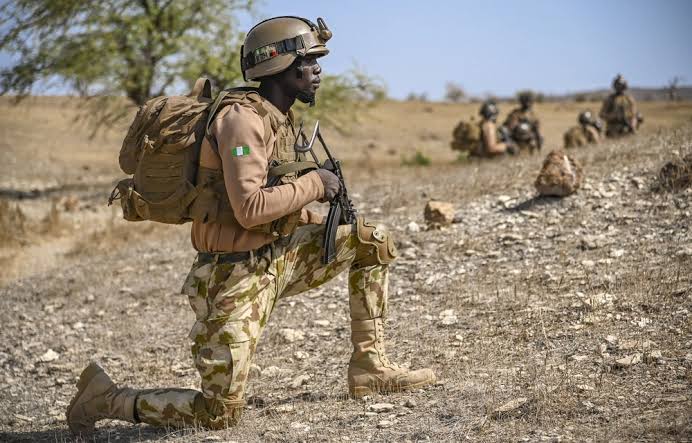
Special Forces units, supported by aerial cover, moved in under the cover of darkness. The high-value target, whose identity is being withheld for “strategic intelligence reasons” but who is known to be a key lieutenant within the Shura Council of the group, was caught off guard alongside his inner circle. The firefight was intense but brief, ending with the clearing of the compound and the recovery of a significant cache of weapons, including Rocket Propelled Grenades (RPGs), improvised explosive devices (IEDs), and sophisticated communication equipment.
The Role of International Intelligence
Perhaps the most notable aspect of this operation was the level of collaboration involved. The Defence Headquarters (DHQ) acknowledged that the strike was supported by “international intelligence partners.” This partnership likely involved satellite imagery and signals intelligence (SIGINT) that allowed the Nigerian military to track the commander’s movements in real-time.
This synergy between local ground forces and global intelligence assets is a cornerstone of the 2026 security roadmap. By cutting off the “head of the snake,” the military aims to create a leadership vacuum that will lead to infighting and the eventual surrender of lower-ranking foot soldiers.
A Boost for Regional Stability
The news has been met with cautious optimism by the residents of Borno and surrounding states. For years, the presence of such high-level commanders has meant constant fear of kidnappings and highway ambushes. The elimination of this particular leader—who was reportedly responsible for several recent attacks on farming communities—offers a glimmer of hope that the path to total peace is narrowing.
The Chief of Army Staff, in a congratulatory message to the troops, emphasized that the war is far from over but insisted that the momentum is now firmly with the state. “We are no longer waiting for the enemy to come to us,” he stated. “We are taking the fight to their doorsteps, into the deepest parts of the forest, and we will not stop until the last vestige of terrorism is wiped out from our soil.”
Looking Forward
While the death of a commander is a tactical win, security experts warn that the military must remain vigilant against retaliatory strikes. Historically, Boko Haram has responded to the loss of leadership with desperate attacks on soft targets. Consequently, security has been beefed up in Maiduguri and other major urban centers across the North-East.
As the military continues its mopping-up operations, this successful raid serves as a testament to the increased capacity and renewed morale of the Nigerian soldier. For the people of the North-East, it is one more step toward a future where the sound of gunfire is replaced by the sounds of trade and development.